You Can’t Hook a Wave
“A high number of largely disinterested followers isn’t a community — it’s dead weight.” - Jo Starling
You Can’t Hook a Wave
Thoughts on telling the difference between noise and signal in social media marketing.
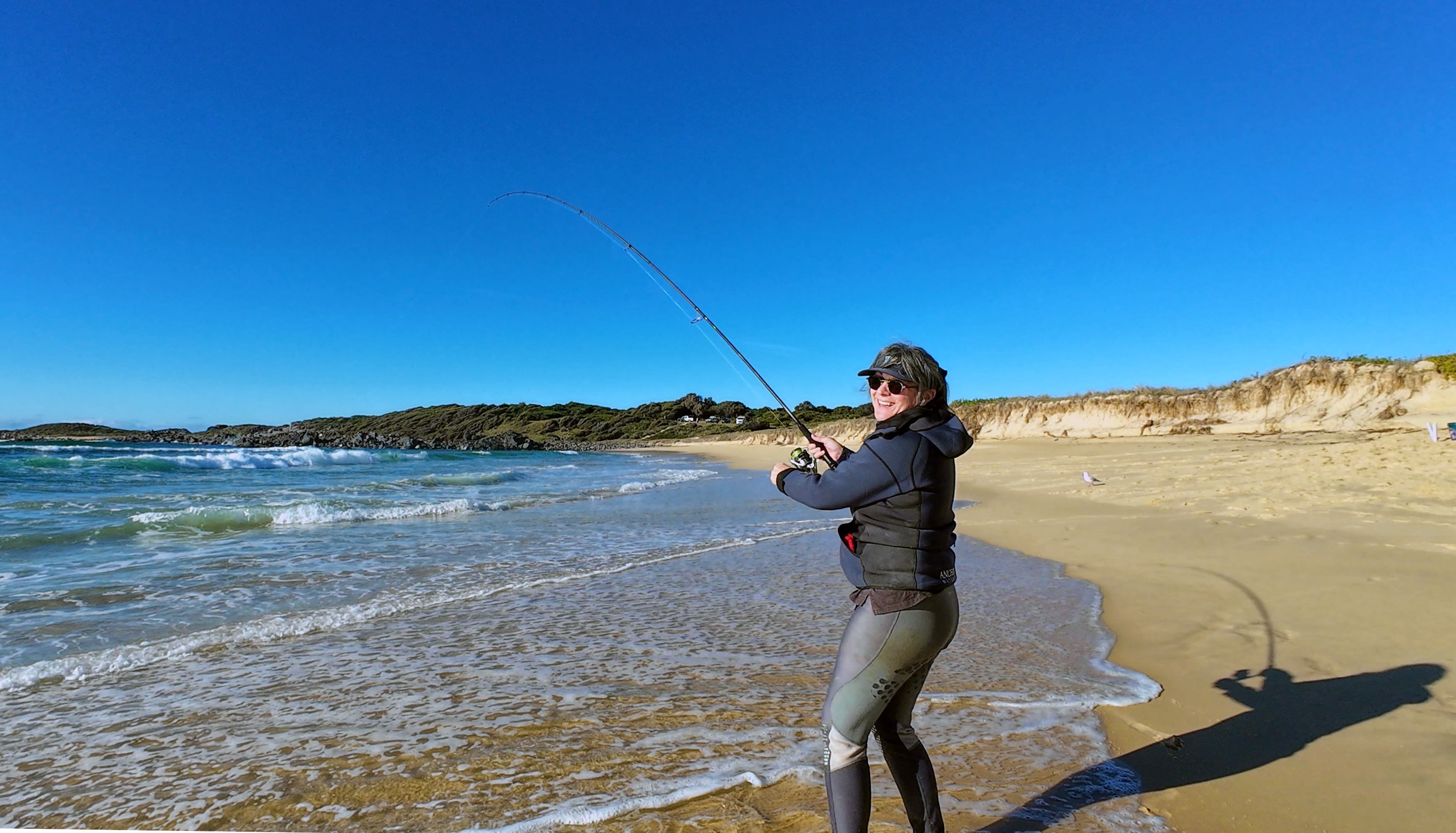
There's something about standing at the edge of the surf with a line in the water that cuts through the noise — ironically, by immersing you in it.
Beach fishing is a masterclass in distraction. The waves are relentless, and every swell that catches your line sends a tug through it that feels, for all the world, like a fish. Your instinct fires. Your pulse quickens. You strike.
Nothing.
That's the sea messing with your head. And social media does exactly the same thing.
Place your bait where your audience feeds.
Every cast puts your offer into the water — and the content around that cast can take many forms. A story, a short video, a thread, a simple question. The format is the rig; the offer is the bait. Before anything goes out, the bait needs to be well-presented. Good bait is specific. It's meant for a particular fish in a particular place. Casting well means understanding not just what you're offering, but where your audience is when they're ready to receive it. Platform matters. Timing matters. Presentation matters.
Learn to feel the difference between a wave and a bite.
Once your line is out, your job changes. You're no longer broadcasting — you're listening. And here's where most founders and business owners fail to set their hook: they're paying attention to the wrong signals.
Waves are metrics that flatter but don't convert. A post gains traction. Likes roll in. Someone tags a friend. Your engagement rate looks healthy. It feels like something. But if none of it moves someone closer to taking you up on your offer, it's just water pulling on your line. Waves are ego food. They feel good. They don't pay the bills.
A bite is different. It's a direct message that goes beyond a comment. It's someone asking "how does this work?" It's a reply that reveals a real problem you can solve. Quiet, deliberate, intentional contact. That's the fish.
Your job is to tell the difference.
And then there's carp.
Some entrepreneurs, chasing the appearance of a healthy waterway, stock their page with carp — follows and likes accumulated purely for the numbers. You've seen it — f4f! — It looks impressive. The biomass is real. But carp are opportunists: they'll take almost any bait, crowd out more discerning species, and steadily churn the water into mud.
On a social platform, that mud is a soupy algorithm. A high number of largely disinterested followers isn't a community — it's dead weight. The algorithm watches engagement ratios closely. When a significant portion of your audience consistently ignores you, the platform stops feeding your content to the people who might actually want it. You've stocked your waterway with the wrong fish, and now the ecosystem can't sustain anything worth catching.
A healthy fishery is selective. So is a healthy audience.
When you feel a bite — strike.
In fishing, a strike is the moment you set the hook. In business, it's a personal connection. Not a broadcast reply. Not a like back. An actual conversation, one-to-one, where you acknowledge the interest, confirm it's real, and begin to build something from it.
Give it time. Give it attention. That single nibble is worth more than a thousand waves.
You can't hook a wave.
No matter how convincing it feels, no matter how much the line trembles — if it's just the surf, there's nothing there to catch. Getting clear on this distinction doesn't just make you a better angler. It makes you a calmer, more deliberate operator who stops exhausting themselves chasing dopamine and starts focusing on the genuine signals in the noise.
Stay in contact with your line. The fish will find you.
© Jo Starling 2026. All Rights Reserved. Please feel free to quote my articles, but please give credit accordingly and include a link back to this site (www.brandkamp.site). All images are protected. Please contact Jo Starling for conditions for publishing by requesting use through my contact page.